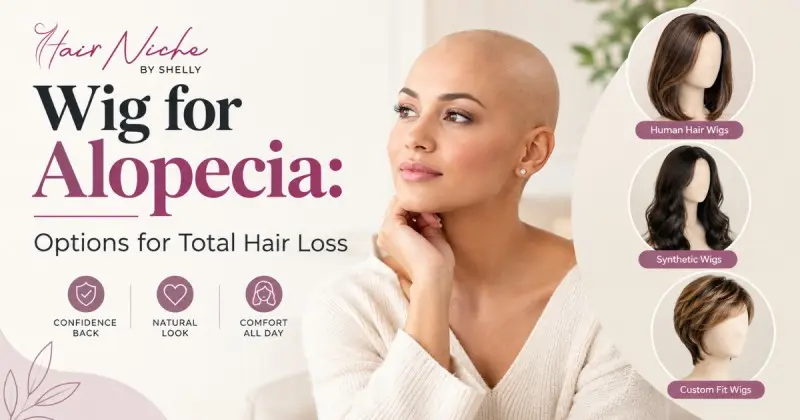
When alopecia has taken all or most of your hair, a wig is chosen differently. There's no hair to blend into or clip onto, so fit, cap comfort and a believable hairline matter more than blending. A breathable mono or silk base with a natural front suits a bare scalp best.
Almost every piece of wig advice assumes you still have hair. Blend it with your leave-out. Clip it to your own strands. Match your texture.
When alopecia has taken everything, none of that applies — and the questions that actually matter are different ones. This guide is written for that situation.
What changes when there's no hair to blend with
Three practical things, all of which work in your favour once you know them.
Nothing has to match. No leave-out means no texture matching, no colour blending at the join, no worrying whether your own hair sits differently. You're free to choose any length, colour or texture you like — many women find this genuinely liberating after months of trying to disguise loss.
Security comes from the cap, not clips. With no hair to grip, hold comes from the cap fit itself and its adjustable straps. Getting the measurement right matters far more than it does for someone with hair.
The scalp is directly involved. A bare scalp feels the cap, the seams and the heat in a way a hair-covered one doesn't. Comfort stops being a secondary consideration and becomes the main one.
Alopecia totalis wig: which base suits a bare scalp
Mono base is the usual recommendation. The open mesh is the most breathable of the constructions, which matters when the cap sits directly on skin all day, and it's gentle on a scalp that may be more reactive than it used to be. The Mono Base Full Head Wig is built this way.
Silk base gives the most realistic parting, so if people see the top of your head — and with no hair underneath there's no backup — it's the strongest option for realism. The Silk Base Full Head Wig covers that.
A shorter style is worth considering, especially at first. A Bob Cut Full Head Wig is lighter, cooler and considerably less work to wash and detangle — which matters when a wig is daily wear rather than an occasional piece.
Our full comparison of wig types covers how each base behaves in detail.
Wig for sensitive scalp: comfort without hair underneath
A bare scalp has no cushioning, so small irritations become significant over a long day.
- Get the measurement right. Too tight causes headaches and pressure at the temples; too loose shifts and chafes. Measure properly rather than guessing.
- Consider a soft liner or cap between the scalp and wig if seams bother you, particularly if your skin is sensitive from treatment.
- Keep the scalp cared for. Clean, moisturised skin tolerates daily wear far better. Dryness and flaking make everything itchier.
- Take it off at home where you comfortably can. Giving your scalp air for part of the day makes the rest easier.
- Mind the heat. Breathable bases help, but no cap is as cool as bare skin — plan for that in summer.
The hairline matters more, not less
With no hair of your own at the front, the wig's hairline carries the whole illusion. There's no fringe or baby hairs to soften it.
Placement is the thing people get wrong: the wig tends to go too far forward, which shortens the forehead and reads as a wig immediately. Position the front where your hairline used to be — roughly four fingers above the eyebrows for most people. A lace front, which fades rather than starts, is the most convincing construction when there's nothing of your own to soften the edge.
Working with a doctor alongside this
Alopecia has several forms, and some respond to treatment, so a dermatologist's assessment is worth having regardless of whether you wear a wig. DermNet's overview of alopecia areata sets out the types and what treatment may involve.
Covering and treating aren't alternatives. Plenty of women do both — and looking like yourself while you work through the medical side makes that process considerably easier to carry.
You get to choose everything now
That's the part worth holding onto. With nothing to match, the wig is entirely your decision — the length you always wanted, the colour you never risked, something easy for weekdays and something longer for occasions.
If you'd like help with measuring, cap comfort or choosing a first wig, book a free consultation — it's a private conversation, with no pressure. Or browse the full range of human hair wigs.
This article is for information only and isn't medical advice; speak to a doctor about diagnosis and treatment.
FAQs
1. What is the best wig for alopecia?
A breathable base with a natural hairline. Mono bases are usually recommended for a bare scalp because they're the most breathable, while silk bases give the most realistic parting.
2. How does a wig stay on with no hair?
Through cap fit and adjustable straps rather than clips, since there's no hair to grip. Correct measurement is what keeps it secure, so it's worth getting right.
3. Which wig base is most comfortable for a bare scalp?
A monofilament base, because the open mesh breathes best and sits lightly against skin. A soft liner underneath can help if seams feel noticeable.
4. Can I wear a wig every day with alopecia?
Yes. Choose a breathable base, make sure the fit is comfortable rather than tight, keep your scalp clean and moisturised, and give it some air at home where you can.
5. Will wearing a wig affect regrowth?
A well-fitted wig sits on the scalp without pulling, so it doesn't interfere with hair follicles. If regrowth begins, mention any scalp irritation to your doctor.
6. Do I need to match my old hair colour?
Not at all. With no hair to blend with, you can choose any length, colour or texture, which many women find one of the few genuinely freeing parts of the experience.
7. Is a shorter wig easier to manage?
Yes. A bob or shorter style is lighter, cooler and much quicker to wash and detangle, which matters when you're wearing it every day.
8. How do I stop a wig feeling hot?
Choose the most breathable base you can, keep the style shorter if practical, and take the wig off at home for part of the day. No cap is as cool as bare skin.
9. Where should the wig hairline sit?
Roughly four fingers above your eyebrows. Placing it too far forward is the most common error and the quickest way to make a wig look obvious.
10. Should I see a dermatologist as well as buying a wig?
Yes. Some forms of alopecia respond to treatment, and a dermatologist can tell you which you have. Wearing a wig doesn't interfere with any treatment plan.