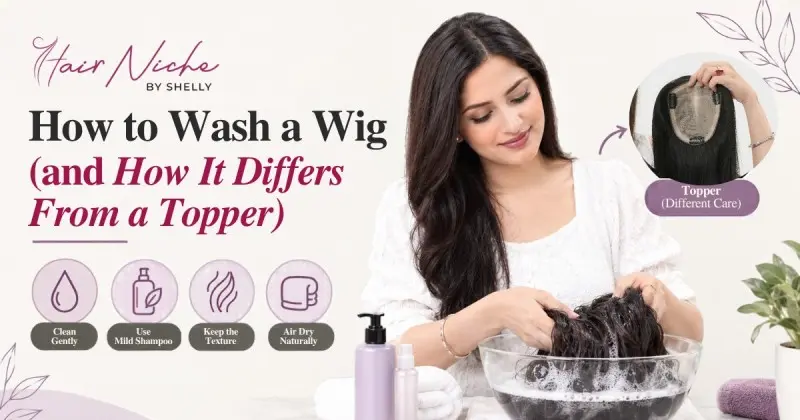
Wash a wig every 8–10 wears using cool water and sulfate-free shampoo, soaking rather than scrubbing, then air dry on a stand. A topper needs washing more often, because it clips into your own hair and sits against your scalp, so it picks up oil a wig never does.
Washing is where most hairpieces are quietly ruined. Not by neglect — by treating them like your own hair, which means washing far too often and far too roughly.
The method below takes about ten minutes of actual work, and doing it properly is the difference between a piece lasting months and lasting years.
How often to wash a wig
Every 8–10 wears is the usual guidance, and the reason is simple: a wig sits on a cap, not on your scalp. It isn't collecting the oil your own hair does.
Adjust for your life rather than counting rigidly. Wash sooner if you've been somewhere smoky, if you use styling product daily, or in heat where you're perspiring under the cap. Wash later if you wear it occasionally for a few hours at a time.
The test is simple: wash it when it looks dull, feels heavy, or has stopped moving freely. Not on a schedule.
If you own more than one piece, rotating them stretches the interval further, because neither accumulates product as quickly.
How to wash a wig, step by step
- Detangle first, while dry. Work from the ends upward with a wide-tooth comb or loop brush. Washing a tangled wig sets the tangles in.
- Fill a basin with cool water. Not hot — heat loosens knots and relaxes any styled curl.
- Soak, don't scrub. Submerge the wig and swish it gently. Scrubbing or wringing is what causes tangling and sheds hair from the base.
- Apply sulfate-free shampoo down the hair in the direction of growth, from base to ends. Never pile the wig up and work shampoo through it.
- Rinse thoroughly in cool water, again in the direction of the hair.
- Condition the mid-lengths and ends only. Keep conditioner off the base — it loosens the knots that hold the hair in.
- Press out water gently with a towel. Don't rub or wring.
- Air dry on a stand, which lets the base keep its shape. Never use a dryer on a wet wig, and never dry it flat and crumpled.
Leave it to dry fully before storing or wearing. A damp wig in a bag is how pieces develop odour and mildew.
Drying takes longer than you'd expect — often overnight for a long wig — so wash on a day you won't need it rather than a few hours before an event.
Washing a hair topper: what changes
Here's the part most guides miss entirely.
A topper clips into your own hair and sits directly against your scalp. That means it absorbs scalp oil, sweat and product in a way a wig simply doesn't — so it needs washing more often, typically every 6–8 wears, and sooner in heat.
The method is otherwise the same, with one extra caution: a topper's base is smaller and more exposed, and the clips are stitched to it. Be especially careful not to tug at the clip points while washing, and keep conditioner well away from the base.
For how washing frequency affects how long a topper lasts overall, our guide to hair topper lifespan covers the full picture.
Wig washing mistakes to avoid
- Hot water. Loosens knots and drops any curl you've styled in.
- Scrubbing or wringing. The main cause of tangling and shedding.
- Conditioner on the base. Weakens the knots holding the hair.
- Brushing while wet. Wig hair is at its most fragile wet, and it doesn't recover.
- Blow-drying on the stand. Direct heat on a wet wig damages both hair and base.
- Storing it damp. Causes odour, and the shape sets wrong.
- Washing too often. The most common mistake of all, and entirely self-inflicted.
Does the base type change anything?
Slightly. A fine lace base needs the gentlest handling of all, because the mesh is delicate when wet — support it rather than letting the weight of soaked hair pull on it.
A silk base like the Silk Base Full Head Wig and a monofilament base like the Mono Base Full Head Wig are both a little more robust, though the same cool water and no-scrubbing rules apply to every construction.
Wash it less, wash it gently
That's genuinely the whole technique. Cool water, no scrubbing, conditioner nowhere near the base, dried on a stand — and far less often than instinct suggests. A topper needs it more often than a wig because it's against your scalp, and that's the only meaningful difference.
For help choosing a piece that suits how often you'll wear it, book a free consultation, or browse the human hair wigs range.
FAQs
1. How often should I wash a wig?
Every 8–10 wears is the usual guidance, since a wig sits on a cap rather than your scalp and collects little oil. Wash sooner in heat or with daily product use.
2. How do I wash a human hair wig at home?
Detangle dry, soak in cool water, apply sulfate-free shampoo down the hair without scrubbing, rinse, condition the mid-lengths and ends only, press out water gently and air dry on a stand.
3. Can I use normal shampoo on a wig?
Sulfate-free is strongly preferable. Sulfates strip moisture from hair that has no scalp oils to replace it, which leads to dryness and tangling.
4. Should I wash a wig in hot or cold water?
Cool water. Heat loosens the knots holding the hair into the base and relaxes any curl you've styled in.
5. How is washing a topper different from washing a wig?
A topper sits against your scalp and clips into your hair, so it absorbs oil and sweat a wig doesn't. It needs washing more often, typically every 6–8 wears.
6. Can I brush my wig while it's wet?
No. Wig hair is at its most fragile when wet, and unlike your own hair it doesn't recover. Always detangle dry, before washing.
7. How do I dry a wig?
Press out excess water with a towel, then air dry on a wig stand so the base holds its shape. Avoid blow-drying a soaking wet wig.
8. Why shouldn't conditioner go on the base?
Conditioner can loosen the knots that hold each hair into the base, which causes shedding. Keep it to the mid-lengths and ends.
9. Can I wash a lace front wig the same way?
Yes, with extra care. Fine lace is delicate when wet, so support the base rather than letting the weight of soaked hair pull on it.
10. What happens if I wash my wig too often?
It dries out, tangles more easily and loses its styled shape faster. Over-washing is the most common reason a hairpiece wears out before it should.